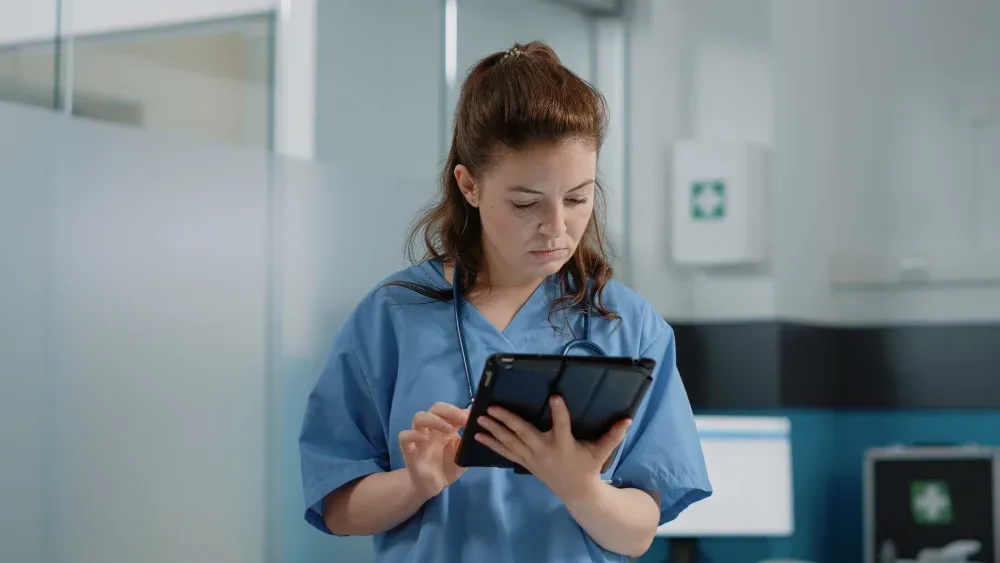
A private duty nursing agency doesn't run on a nine-to-five clock. Care happens in 12-hour blocks, overnight shifts, split coverage between two caregivers on the same patient, and the occasional 6 a.m. call from a nurse who can't make it in. Try managing that with a shared spreadsheet and a group text thread, and eventually something slips — a shift goes uncovered, an overtime hour gets missed, or a family calls asking where their caregiver is.
That's the gap a shift app is built to close. Instead of a scheduler working the phones every time something changes, the schedule lives on every caregiver's phone, updates in real time, and flags problems — like an unfilled shift or an approaching overtime threshold — before they turn into a crisis.
What a shift app actually does for a private duty agency
At the core, a shift app puts the whole schedule in one place that both office staff and field caregivers can see and act on. That sounds simple, but for private duty nursing specifically, it solves a handful of problems that generic scheduling tools weren't built for.
Filling call-outs fast. When a caregiver can't make a shift, the app can push an open-shift alert to everyone qualified and available, instead of a coordinator working through a contact list one name at a time. The shift gets picked up in minutes rather than hours, which matters a lot when a patient is waiting.
Split-shift and multi-caregiver coverage. Private duty shifts don't always map neatly onto one nurse. A 12-hour authorization might end up split between two caregivers because of a mid-shift emergency, and the schedule needs to reflect that without breaking the underlying authorization or duplicating hours in payroll.
Overtime visibility before it happens. A caregiver working with two different patients in the same week can cross into overtime without anyone noticing until the pay period closes — by which point it's a payroll correction instead of a scheduling decision. A shift app that tracks hours across assignments in real time flags the threshold while there's still time to adjust the schedule.
Mobile-first for a mobile workforce. Private duty caregivers aren't sitting at a desk. They need to see their schedule, confirm a shift, or request a swap from their phone between visits — not log into a desktop portal at the end of a 12-hour shift.
Why this matters more in 2026
Staffing shortages in home care haven't eased up, and every open shift App a coordinator has to fill manually is time not spent on the parts of the job that actually need a human — matching caregiver skills to patient needs, handling family communication, reviewing care plans. Agencies running on spreadsheets and phone trees are spending that time on logistics instead.
There's also a compliance angle that's easy to underestimate. Overtime rules for caregivers working across multiple patient assignments aren't always straightforward under the Fair Labor Standards Act, and getting it wrong isn't just a payroll headache — it's a liability. Software that tracks hours automatically across assignments removes a lot of the guesswork a manual system leaves behind.
Try OfficePortal free for 5 users
All-in-one HRMS — attendance, payroll, leave and more. No credit card needed.
Scheduling software across other industries
Private duty nursing has some of the sharpest scheduling challenges out there, but the underlying problem — matching qualified people to open shifts in real time — shows up everywhere shift App work exists. Agencies looking at nurse scheduling software free options often find that the free tier covers the basics (shift assignment, mobile visibility, swap requests) while more complex needs like multi-patient overtime tracking require a paid plan.
The same core mechanics apply well beyond healthcare. Crew scheduling software — used by field service teams, warehouse operations, and shift-based crews — solves nearly identical problems: filling a no-show fast, tracking hours across job sites, and giving a mobile-first team visibility into their schedule without a phone call. Whether it's a nurse covering a home visit or a crew lead covering a job site, the software pattern is the same: publish the schedule, let the team self-serve on swaps and coverage, and catch overtime and compliance issues before they become expensive.
What to look for in a shift app for private duty nursing
- Real-time schedule publishing — caregivers see changes the moment they happen, not the next morning
- Overtime tracking across multiple patient assignments, not just per shift
- Mobile app built for people who aren't at a desk during their workday
- Conflict detection that flags double-bookings or rest-period violations before the schedule goes live
- Payroll integration so approved hours flow straight into pay runs without manual re-entry
Conclusions
OfficePortal's shift scheduling software covers the fundamentals private duty agencies actually need: shift assignment from a mobile app, real-time conflict and overtime detection before a rota is published, and attendance data that flows directly into payroll. It's free for up to 5 users with no credit card required, which makes it a reasonable way to test whether a dedicated shift app solves the coverage problems a spreadsheet can't.
Reference Pages
Employee Shift Scheduling Software
Employee Attendance App: Features, Benefits, and Best Practices
Overtime Tracker
Interview Scheduling
Night Shift Management

About the author
Guhan Chellachamy
Director
Guhan Chellachamy is a Director focused on both business strategy and technology, working hands-on across product and engineering. He enjoys building practical, scalable solutions that move the business forward
Connect on LinkedIn